Activities to Develop Motor Skills in Children (A Practical Parent’s Guide)
Discover simple and effective activities to develop motor skills in children aged 1–5. Learn fun gross and fine motor exercises, sensory play ideas, and coordination activities for toddlers and preschoolers.
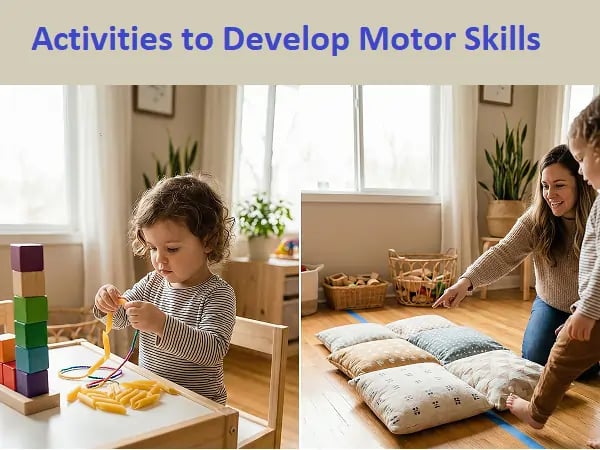
Motor skills are the foundation of independence. When children learn to hold a spoon, draw a circle, button a shirt, jump, or run confidently, they are not just playing — they are building essential life abilities. These everyday actions depend on strong coordination, balance, and muscle control.
Every child develops at their own pace. Some toddlers start climbing early, while others take more time to gain confidence. However, intentional play and structured toddler development activities can significantly accelerate progress. The good news is that you do not need expensive toys or therapy equipment. Most effective activities to develop motor skills in children can be done using simple household items.
This guide provides easy, low-preparation, parent-friendly ideas that support both fine and gross motor development for toddlers and preschoolers aged 1–5 years.
Understanding the Basics: Fine Motor Skills vs Gross Motor Skills
Before starting activities, it is important to understand the difference between the two primary types of motor skills.
Gross Motor Skills
These involve large muscle groups and whole-body movement. Examples include:
Crawling
Walking
Jumping
Running
Balancing
Gross motor development builds strength, coordination, posture, and endurance.
Fine Motor Skills
These involve small muscle movements, especially in the hands and fingers. Examples include:
Holding a spoon
Zipping a jacket
Turning book pages
Using crayons
Cutting with child-safe scissors
Fine motor development supports handwriting readiness, self-care tasks, and hand-eye coordination.
Both skill types work together to help children function confidently in daily life.
Gross Motor Activities (Power, Strength & Balance)
These coordination exercises for kids improve muscle strength, stability, and overall body awareness.
1. The Indoor Obstacle Course
Create a simple obstacle course using:
Pillows to crawl over
Painter’s tape on the floor as a “balance beam”
Cardboard boxes to crawl through
This activity improves balance, spatial awareness, and core strength. It also keeps children physically engaged indoors.
2. Animal Races
Turn movement into a fun game:
Hop like a frog
Waddle like a duck
Crawl like a bear
Slither like a snake
Animal races strengthen different muscle groups while improving coordination and creativity.
3. Balloon Volleyball
Use a balloon instead of a ball. This slows movement and improves hand-eye coordination. It also reduces the risk of injury or breaking household items.
This simple activity develops timing, reaction speed, and upper body control.
Fine Motor Activities (Precision, Control & Focus)
These activities strengthen small hand muscles necessary for writing and self-care.
1. The Pasta Threading Challenge
Provide:
Dry penne pasta
Yarn or pipe cleaners
Encourage your child to thread pasta to make “jewelry.” This improves finger dexterity, bilateral coordination, and concentration.
2. Kitchen Tongs Scavenger Hunt
Using kitchen tongs or child-safe tweezers, ask your child to pick up:
Cotton balls
Pom-poms
Small toy blocks
Place them into a muffin tray. This strengthens finger muscles and enhances grip control.
3. Playdough Power
Squeezing, rolling, pinching, and cutting playdough strengthen intrinsic hand muscles. Encourage children to:
Roll snakes
Make small balls
Cut shapes using safe tools
Playdough is one of the most effective toddler development activities for fine motor strength.
Sensory Play Ideas to Boost Motor Skills
Sensory play enhances brain-body connection while making learning enjoyable.
1. The Shaving Cream Trace
Spread shaving cream on a tray and let your child:
Draw shapes
Trace letters
Write their name
This improves tactile processing and pre-writing skills.
2. Rice Bin Treasure Hunt
Fill a container with dry rice or beans and hide small toys inside. Ask your child to find them.
This sensory activity improves hand coordination, focus, and tactile exploration.
Always supervise closely to ensure safety.
When Should Parents Consult a Professional?
While children develop at different rates, parents should monitor milestones. If a child consistently struggles with:
Walking well after peers
Using both hands together
Holding small objects
Coordinating basic movements
Consulting a pediatrician or occupational therapist can provide clarity and early support. Early intervention is proactive, not alarming. In many cases, small targeted exercises can make a substantial difference.
Additional Tips for Supporting Motor Development
Encourage daily outdoor play.
Limit excessive screen time.
Provide safe climbing and exploration opportunities.
Allow children to struggle slightly before offering help.
Celebrate effort, not perfection.
Messy play is productive play. Movement builds confidence.
Final Thoughts: Play Is Powerful
The best activities to develop motor skills in children are often simple, playful, and consistent. You do not need complicated programs. What children need most is movement, exploration, and encouragement.
Motor skill development lays the foundation for independence, school readiness, confidence, and lifelong health. By integrating sensory play ideas, coordination exercises for kids, and hands-on toddler development activities into daily routines, parents create a strong developmental base.
Consistency matters more than complexity.