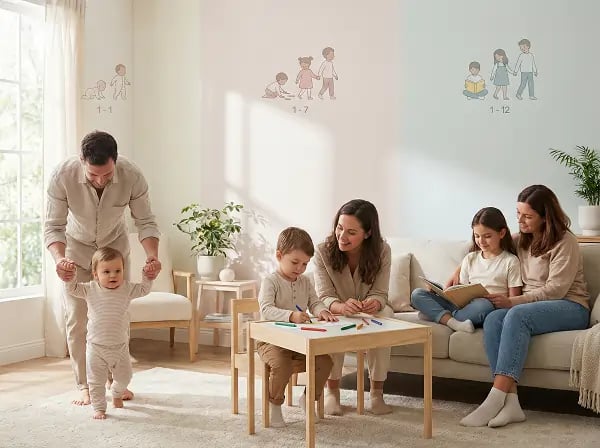
At one point in life, almost every married couple becomes a parent — often without formal training or preparation. Overnight, responsibilities multiply. Questions arise. Doubts creep in. Many parents quietly wonder, “How do I raise my child the right way? Am I doing enough? What skills should I teach at each stage?”
Parenthood does not come with a manual. Yet the early years of a child’s life lay the foundation for confidence, intelligence, emotional strength, and long-term success.
Why Proper Growth and Skill Development Matter
Childhood is not just about growing taller. It is about building:
Cognitive abilities
Emotional regulation
Social intelligence
Physical coordination
Problem-solving skills
Communication confidence
A child who develops balanced skills early is better prepared to handle academic pressure, relationships, career challenges, and life decisions later.
Success in life is rarely accidental. It is built on habits, exposure, discipline, and guided learning from the early years.
Questions Every Parent Has
Almost every parent asks:
What should I do with my son at age 1?
What should I teach my 2-year-old?
Is my 3-year-old developing normally?
Is my child’s mental capacity improving?
Should my child know more by this age?
Comparison with other children often increases anxiety. Social media adds pressure. Relatives give advice. But what truly matters is age-appropriate skill development — not competition.
Is My Child Growing Properly?
Parents naturally worry about:
Speech development
Memory and understanding
Social interaction
Emotional reactions
Physical milestones
It is important to understand that every child develops at a slightly different pace. However, structured learning and consistent guidance significantly improve growth outcomes.
Instead of focusing only on marks or performance, focus on building core life skills.
Below is a comprehensive, age-wise parenting guide to help you understand what skills to nurture at each stage.
Age-Wise Skills to Teach Your Child
👶 0–1 Year: Sensory and Emotional Foundation
The first year of life is centered on building a strong sensory and emotional base. During this period, bonding, sensory stimulation, and early motor development play a critical role in shaping brain growth. Babies begin learning about the world through sight, sound, touch, and movement, and every interaction contributes to neural development.
At this stage, it is important to encourage eye contact and facial recognition, as these strengthen emotional connection and social awareness. Responding to sounds and voices helps develop listening skills and early communication pathways. Simple hand movements, grasping objects, crawling, and supported standing gradually build coordination and muscle strength. Emotional bonding through gentle touch, soothing voice tones, and consistent responsiveness creates a sense of safety and trust.
Parents can actively support development by talking frequently to their baby, even during routine tasks. Reading simple picture books introduces early language exposure. Playing soft music can stimulate auditory senses, while tummy time strengthens neck and upper body muscles. Smiling, maintaining eye contact, and responding warmly to expressions reinforce emotional security.
During the first year, structured lessons are not necessary. What matters most is love, responsiveness, and a secure environment. At this stage, emotional safety and connection become the most powerful foundations for lifelong learning and confidence.
🧒 1–2 Years: Communication and Exploration
This is the stage where curiosity explodes.
Skills to Teach:
Basic vocabulary (daily objects, names)
Simple instructions (“Give me the ball”)
Self-feeding attempts
Walking confidently
Identifying shapes and colors
Parent Action Plan:
Name objects repeatedly
Encourage pointing and naming
Allow safe exploration
Avoid excessive screen time
Involve them in small daily activities
Children learn best through repetition and observation.
👦 2–3 Years: Independence and Language Growth
At this stage, children begin asserting independence.
Skills to Develop:
Speaking short sentences
Toilet awareness
Basic problem-solving
Simple social interaction
Recognizing emotions
Teach:
Sharing
Saying “please” and “thank you”
Cleaning up toys
Expressing feelings verbally
This is also the right age to introduce structured play and storytelling.
🧑 3–5 Years: Social and Cognitive Skills
Preschool years are critical for brain development.
Essential Skills:
Clear communication
Basic counting
Alphabet recognition
Emotional control
Following routines
Encourage:
Creative play
Drawing and coloring
Group activities
Listening skills
Patience during waiting
Limit passive screen exposure. Replace it with interactive play.
🧒 6–9 Years: Discipline and Responsibility
School years begin shaping long-term habits.
Skills to Teach:
Time management
Completing homework independently
Basic money understanding
Respectful communication
Teamwork
Important Focus:
Encourage reading habit
Teach problem-solving instead of giving solutions
Introduce small responsibilities at home
This is also when character building becomes crucial.
🧑🎓 10–12 Years: Critical Thinking and Self-Control
Pre-teen years prepare children for adolescence.
Skills to Develop:
Logical thinking
Emotional regulation
Digital discipline
Decision-making
Self-confidence
Teach them:
How to handle peer pressure
Safe internet habits
Goal setting
Accountability
Open communication is essential during this phase.
Importance of Travelling and Real-Life Exposure
One of the most underestimated yet powerful parenting tools is exposure. Children do not learn only through instructions; they learn by observing, experiencing, and participating in the real world. Even short local trips can significantly influence a child’s development. Travelling introduces adaptability as children adjust to new environments, people, and routines. It enhances cultural understanding, sharpens observation skills, builds communication confidence, and teaches patience in situations that may not always go as planned.
Similarly, involving children in everyday tasks provides invaluable life lessons. Taking them along for grocery shopping, bank visits, public transport journeys, or social gatherings helps them understand how the world functions beyond their home or classroom. Through these experiences, they develop real-world problem-solving abilities, improve social interaction skills, gain early financial awareness, and learn appropriate public behavior.
Such real-life exposure strengthens practical intelligence in ways that books or screens alone cannot replicate. Experiences create context, and context deepens understanding, making learning more meaningful and long-lasting.
Skills Beyond Academics
Many parents focus only on studies. However, true development includes:
Emotional Intelligence
Teach children how to identify and manage emotions.
Communication Skills
Encourage public speaking, storytelling, and discussion.
Physical Fitness
Daily outdoor activity improves brain function and discipline.
Digital Literacy
Teach safe and responsible use of technology.
Moral Values
Honesty, gratitude, respect, and empathy should be modeled at home.
Resilience
Allow children to fail and learn instead of overprotecting them.
Final Thoughts
Raising a child is not about perfection — it is about direction. Skill development is not a one-day task; it is a continuous process that evolves with age.
Instead of worrying whether your child is ahead or behind, focus on whether they are learning something meaningful each day. Structured guidance, emotional support, exposure to the real world, and consistent routines create a strong foundation for lifelong success.
Parenting becomes less confusing when you understand what to teach and when to teach it. Growth is gradual, but intentional effort makes a lifelong difference.